
Detect Mule Accounts and High-Risk Payment Infrastructure
Helping Financial Institutions Proactively Prevent Financial Crime
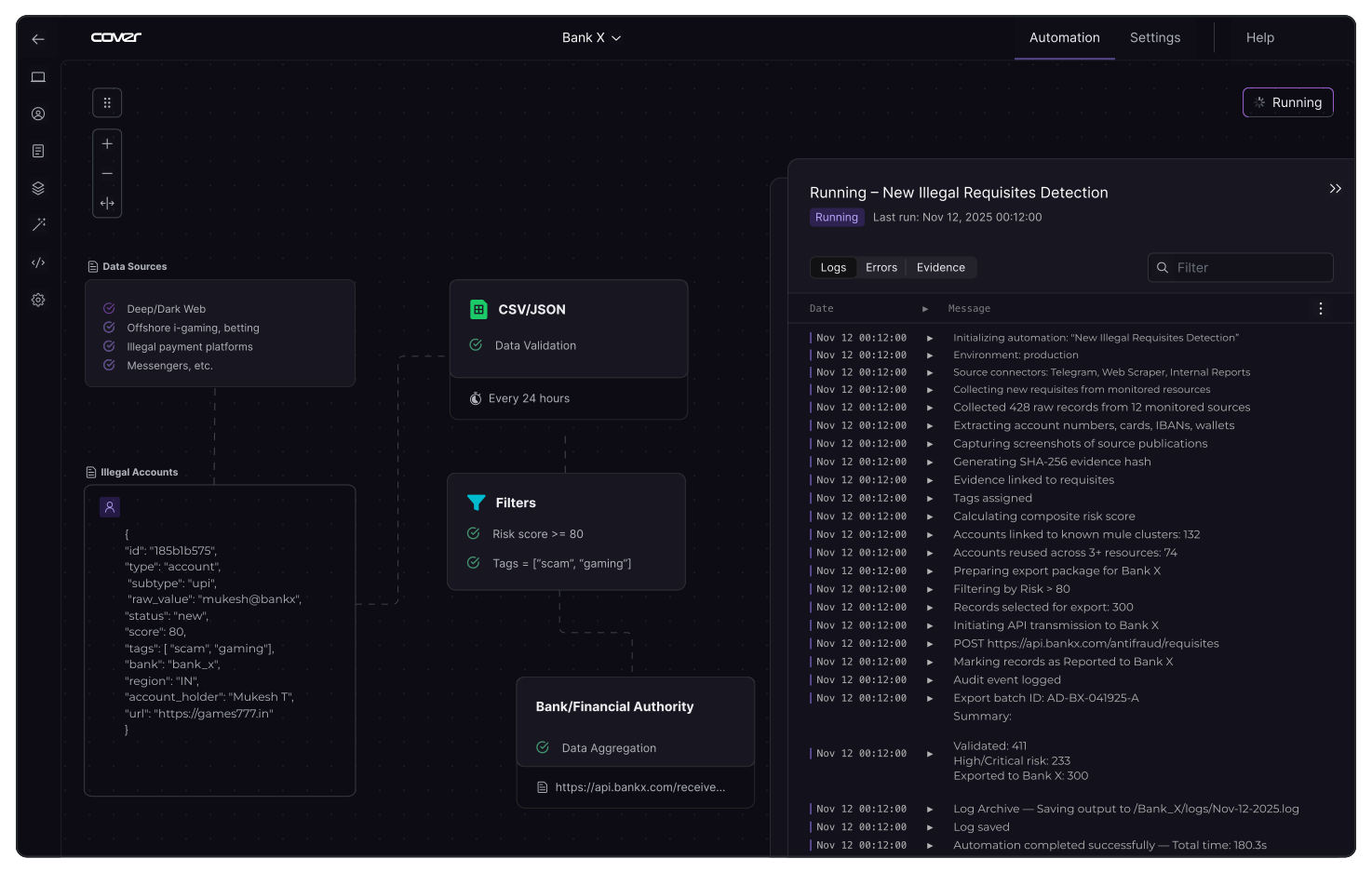
Financial Crime Intelligence Platform
Designed to detect and prevent the use of drop accounts (bank accounts, e-wallets, payment credentials)
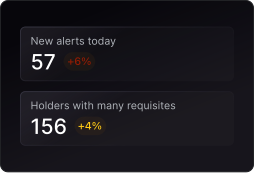
Mule & Drop Account Monitoring
Real-time detection of mule accounts and compromised payment identifiers across high-risk payment ecosystems.

Machine-readable Data (JSON/CSV)
Machine-readable intelligence feeds (JSON/CSV) designed for seamless integration with fraud detection and compliance systems.
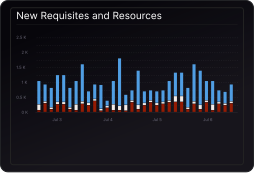
Web Portal for Analysts
Search, filter, and analyze verified signals from high-risk sources, visualize connections between suspicious accounts, and download compliance-ready reports.

Lifecycle & Status Management
Manage the lifecycle of suspicious payment identifiers from discovery to analyst verification.

Infrastructure & Source Monitoring
Track websites, Telegram channels, and other platforms distributing suspicious payment data.
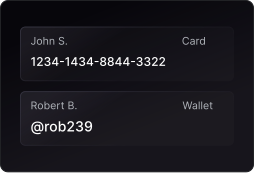
Structured Payment Identifier Registry
Centralized registry of high-risk payment identifiers enriched with bank, region, subtype, and holder attribution.
From Signals to Verified Intelligence
Unified Risk Visibility
We aggregate verified drop activity signals and empower your anti-fraud team with actionable insights.
Track Key Metrics
Monitor dominant banks, emerging source platforms, and evolving risk patterns across payment ecosystems.
Last 7 days
Intelligence Collection
Verification & Analyst Review
Seamless Integration
Continuous Intelligence Improvement
From signal ingestion to verified intelligence in seconds.
Automated. Distributed.
New payment identifiers ingested
Holder identity check
Payment Provider
Payment provider enrichment
Verification in Progress
Suspicious resource
Resource Enrichment e.g., WHOIS,etc.
Intelligence at Scale:
Payment identifiers
Monitoring
API Integration
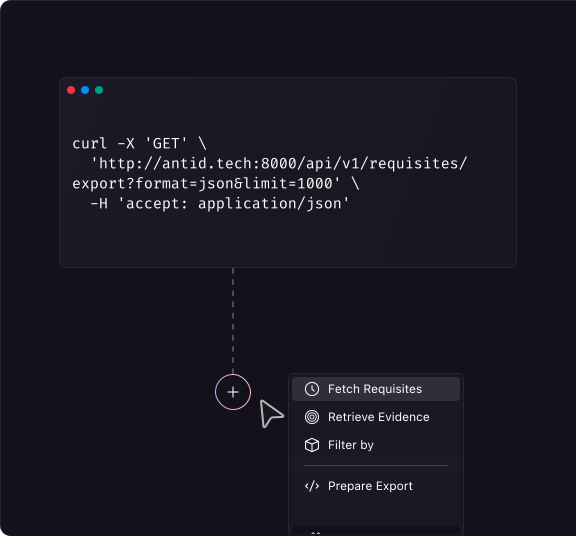
Integrate verified fraud intelligence directly into fraud monitoring systems, compliance workflows, or internal risk engines.Unified API for Fraud Intelligence Operations.
Case Study
Criminal networks exploit casinos, betting platforms, and informal payment channels to move illicit funds.
Report: Casinos, Informal Banking, and Transnational Financial Crime in East and Southeast Asia
Processing player deposits and withdrawals outside regulated banking channels.
Intermediary layers that consolidate funds before cross-border transfers.
Bridging fiat-to-crypto conversions using mule-controlled bank accounts.
Processing player deposits and withdrawals outside regulated banking channels.
Intermediary layers that consolidate funds before cross-border transfers.
Bridging fiat-to-crypto conversions using mule-controlled bank accounts.
Processing player deposits and withdrawals outside regulated banking channels.
Intermediary layers that consolidate funds before cross-border transfers.
Bridging fiat-to-crypto conversions using mule-controlled bank accounts.
Processing player deposits and withdrawals outside regulated banking channels.
Intermediary layers that consolidate funds before cross-border transfers.
Bridging fiat-to-crypto conversions using mule-controlled bank accounts.
Proceeds from phishing, account takeovers, card fraud, and business email compromise are routed through mule-controlled bank accounts before further distribution.
Mule accounts are used to receive payments for illicit products and services.
Mule-controlled bank accounts collect funds from victims.
Proceeds from phishing, account takeovers, card fraud, and business email compromise are routed through mule-controlled bank accounts before further distribution.
Mule accounts are used to receive payments for illicit products and services.
Mule-controlled bank accounts collect funds from victims.
Proceeds from phishing, account takeovers, card fraud, and business email compromise are routed through mule-controlled bank accounts before further distribution.
Mule accounts are used to receive payments for illicit products and services.
Mule-controlled bank accounts collect funds from victims.
Proceeds from phishing, account takeovers, card fraud, and business email compromise are routed through mule-controlled bank accounts before further distribution.
Mule accounts are used to receive payments for illicit products and services.
Mule-controlled bank accounts collect funds from victims.
Need Answers? Start Here
Explore quick answers to common questions
A drop account (or mule account) is a bank or payment account used by fraudsters to move illicit funds, often disguised as legitimate transactions.